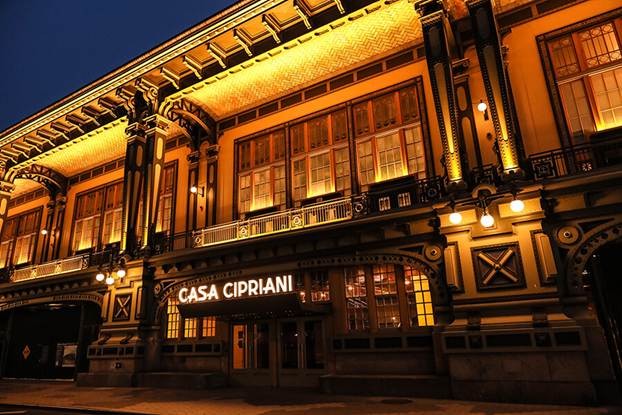
For years Bernstein Redo & Savitsky, P.C. has been the premier law firm representing private members clubs in New York City. From Soho House which came to Ninth Avenue twenty-three years ago, to The Twenty Two which opened on 16th Street last year, we have guided the most exclusive and sought after members clubs through the liquor license process. Other clubs we have been proud to work with include Zero Bond, Casa Cipriani, San Vicente Buglalows, The Ned, Chez Margaux, Moss, Casa Tua, Fly Fish Club, ZZ’s, Seven23 at the Gansevoort Hotel, The Wing, Nexus, Maxwell Social, Aman, among others.
Two other big names are going to join the field. Maison Estelle, which operates a members club in an exquisite Georgian townhouse in the Mayfair section of London will be taking over the former Limelight building at Sixth Avenue and 20th Street. That group also operates Estelle Manor and another members club, Celeste in Notting Hill. Also crossing the pond and coming to 675 Hudson Street will be Annabel’s, one of the world’s most celebrated members clubs. First opened at Berkeley Square in London in 1963, it was owned by the Birley family until 2007 and was named after the founder’s wife. Bernstein Redo & Savitsky, P.C. is proud to continue in its tradition of being the go-to firm for private members clubs in New York, and is proud to join the Estelle and Annabel’s teams.
The space at 446 Columbus Avenue, formerly The Milling Room for a dozen years, is being taken over by The Group which will open its fifth Boucherie in New York City. The Milling Room was evicted earlier this year for non-payment of rent. Boucherie, which operates restaurants in Manhattan, Chicago, Washington DC and Miami is a traditional French restaurant that celebrates good food and joie de vivre by combining a blend of a steakhousoe and a refined Parisian brasserie. Boucherie will also be taking over the former Starbucks space at 444 Columbus, and combining the two spaces to create a 283 restaurant, one of the largest on the Upper West Side. The space has been a restaurant since at least the 1990’s, when it was Main Street and then Callo Ocho. In addition to Boucherie, The Group also owns and operates Olio e Piu, an Italian trattoria with three locations in Manhattan, and outposts in Chicago and D.C. Bernstein Redo & Savitsky, P.C. assisted Boucherie with its lease and liquor license, and is proud to be part of the Boucherie team.
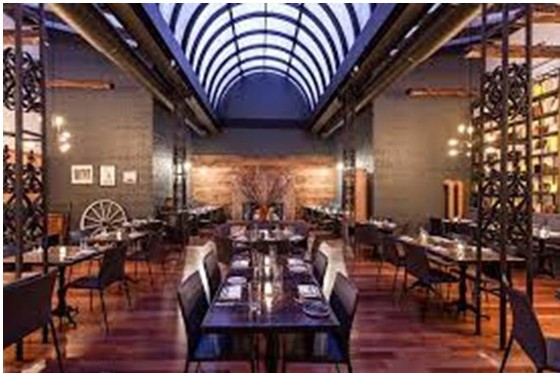
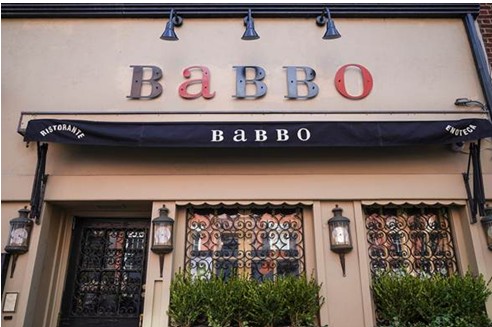
Babbo, one of New York’s most iconic Italian restaurants at 110 Waverly Place, has been acquired by Stephen Starr and Starr Restaurant Group. Michelin-starred Del Posto’s former chef Mark Ladner has been hired to run the kitchen. Babbo made a splash when it was opened in 1998 by Mario Batali and Joe Bastianich. Batali left the business in 2017. Starr Restaurant Group’s New York restaurants include Buddakan, Upland, Pastis, Le Coucou and others. Bernstein Redo & Savitsky, P.C. is proud to be a part of the Babbo and Starr Restaurant Group team.
The New York Court of Appeals issued a long-awaited decision today in a case that has significant implications for commercial lease good guy guaranties. Typically, a good guy guaranty provides for a release of the guarantor upon surrender of the premises – often after a notice period – and payment of all rent and additional rent up through the surrender date. The problem arose when a lease required any surrender to be in writing and signed and accepted by the landlord. Lower court decisions incorporated that lease provision into the guaranty and as a result if the landlord did not accept the surrender, the guarantor was not released and remained liable under the guaranty. That all changed by the decision issued today in 1995 CAM LLC v. West Side Advisors, LLC, 2025 NY Slip Op 05782, with an opinion written by Court of Appeals Chief Judge Rowan D. Wilson. The court ruled that tethering the guarantor’s liability to the landlord’s acceptance of surrender “would rent most of the language in the guaranty superfluous.” All of the language in the guaranty, including the notice provision, demonstrated that the parties’ intended the surrender to be unilateral and not dependent upon landlord acceptance. Thus, so long as the guarantor complied with the obligations for release as written in the guaranty, the guarantor would be released without a signed or accepted surrender. Note that if the guaranty on its face does specifically require a written or signed surrender, that will still be enforced.
Kith Ivy at 120 Leroy Street in Manhattan is opening its members only club featuring a restaurant, Café Mogador, three rooftop full-sized padel courts, the first Erewhon tonic bar location outside of Los Angeles, a Giorgio Armani designed full-service spa, and a 1,500 square foot gym. The spa will include a jacuzzi, hammam, sauna, steam rooms and cold plunge. Kith CEO Ronnie Fieg has partnered with Midtown Equities and the Cayre family in launching the club. The project faced stiff opposition by Manhattan Community Board 2 and local residents but was approved for a liquor license in August. Bernstein, Redo & Savitsky, P.C. is proud to be part of the Kith Ivy team.
Following up on our May 20, 2025 post, we are pleased to report that this week the State Senate and Assembly passed the long-awaited bill that allows a private members club in New York to be licensed to a for-profit company. The legislation will add a new section 64(f) to the Alcoholic Beverage Control Law and will create a new license class, a “for-profit club,” that can be licensed for a recreational, social, patriotic, political, athletic or benevolent purpose. A for-profit club license may also be obtained for communal workspace and corporate dining rooms, a change from existing law. To qualify for a license under this new section, the club must have at least 100 members. Liquor service will be limited to dues paying members and their guests. The bill still must be signed by Governor Hochul and then has a 180-day waiting period before it becomes effective. Any not-for-profit members club licensees will likely have to file a class change with the New York State Liquor Authority after the law becomes effective on notice to the local community board or municipality. This is a dramatic change in licensing and Bernstein Redo & Savitsky, P.C. is proud to have been involved in its passage.
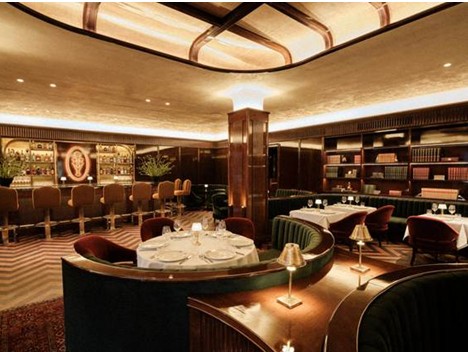
New York has seen an explosion in private members clubs catering to diverse interests recently. From Tiro a Segno, a club in Manhattan since 1888, to San Vicente Bungalows which opened in the former Jane Hotel in March 2025, the pay-for-play social scene is thriving. Licensing a private members club in New York has challenges. By law, it must be operated by a not-for-profit company and may only serve its dues paying members and their guests. There are restrictions on private events, along with many other rules. We have been helping members clubs obtain liquor licenses ever since Nick Jones and Soho House landed in the Meatpacking District over twenty-two years ago, in 2003. Bernstein Redo & Savitsky, P.C. has developed a particular expertise in licensing members clubs in New York. In addition to Soho House, we are proud to have obtained private members club licenses for Zero Bond, Casa Cipriani, San Vicente Bungalows, ZZ’s, Chez Margaux, The Twenty Two, Casa Tua, Fly Fish, Ned Nomad, Maxwell Social, Neuehouse, Norwood, Seven 24 Collective, Tiro e Segno, and The Wing, to name a few. Other club licenses we are working on are in process, including Stylus, and clubs to be opened at the Gramercy Park Hotel, at 520 Fifth Avenue and at 40 Broad Street. There is a bill presently pending in Albany that would create a new class of private members club licenses that would eliminate the not-for-profit company requirement. Bernstein Redo & Savitsky, P.C. has been at the forefront of working with lobbyists, the New York State Liquor Authority, and club operators to shepherd this bill through the legislative process. We will report next month on its success.
Mayor Eric Adams signed into law the controversial Safe Hotels Act, claimed by its sponsors to be a historic step towards enhancing public safety and ensuring worker protection in the city’s hotel and hospitality industry. The legislation requires hotels to obtain a license to operate in New York City and implements enhanced security and safety measures such as panic buttons for housekeepers, human trafficking recognition training, and subcontracting and employment restrictions for critical, public-facing hotel staff. While the legislation received support form numerous hotel and trade unions, groups supporting hotel owners claimed that it would kill jobs, burden the industry and throw it into turmoil by, among other things, leading to skyrocketing room rates. Smaller hotels are exempt from the legislation. The bill passed with overwhelming support by the City Council.
A long awaited amendment to the laws on temporary retail permits was signed by Governor Hochul on Wednesday. The prior law only permitted temporary retail liquor permits on new applications in New York City if the premises had been licensed within the past two years. The new law, passed by the legislature in June and awaiting the governor’s signature, eliminated the two year requirement. Now, any applicant for an on premises license can apply for a temporary permit, even if the space was never previously licensed. Approval of the temporary permit, however, is conditioned upon the New York State Liquor Authority making a preliminary finding, after the 500 foot law hearing, that the public interest test has been met. An applicant operating under a temporary permit on a new application must close by midnight, and is not permitted to have a DJ or live music. This is a hugely significant change in the law, especially given how long it takes for final approval of liquor license applications.
On May 15, 2024, the New York City Bar Association will present a webinar on Restaurant Law from 9:00 am until 1:00 pm sponsored by the Hospitality Law Committee. The program will focus on the corporate, real estate, liquor license, and employment/labor issues in opening and operating a restaurant. Donald Bernstein of Bernstein Redo & Savitsky, P.C. will present a one-hour section on retail liquor licenses in New York, including reviewing who can be licensed, what can be licensed, the 200 foot and 500 foot laws, and how to navigate the New York State Liquor Authority and the local community boards. He will also discuss the ever popular private members club and the rules in New York that govern the licensing of private members clubs.